
Source: designboom.
Craft is no longer confined to the past, nor does it exist simply to preserve tradition. Instead, it has become a way of thinking through the challenges of the present, offering approaches to design, architecture, art, and technology that value curiosity, patience, and material understanding.
making as knowledge
Throughout Crafting the Future, one idea quietly surfaced again and again. Craft is no longer confined to the past, nor does it exist simply to preserve tradition. Instead, it has become a way of thinking through the challenges of the present, offering approaches to design, architecture, art, and technology that value curiosity, patience, and material understanding. Across disciplines, making emerged as a form of research, with every gesture carrying generations of knowledge while remaining open to experimentation.
This shift was reflected in conversations with architects, designers, artists, and makers whose practices move fluidly between handwork and innovation. Kengo Kuma spoke of craftsmanship as a way of building deeper connections between architecture and place, while Alberto Cavalli reflected on the enduring intelligence of the hand as an essential part of imagining the future. Fernando Laposse described craft as something rooted in relationships with communities rather than objects alone, and the Visteria Foundation highlighted the importance of nurturing new generations of makers. Together, these perspectives proposed that the future is not something we simply invent. It is something we continue to shape through knowledge that is shared, refined, and passed from one hand to another.

Kengo Kuma’s Yusuhara Wooden Bridge Museum | image by Takumi Ota
living materials
Many of the projects featured throughout the chapter challenged the assumption that materials are passive resources waiting to be transformed. Instead, they invited us to think of them as living systems with their own rhythms, behaviours, and possibilities. Rather than extracting value from nature, designers increasingly worked alongside biological processes, allowing growth, decay, and adaptation to become active parts of the creative process.
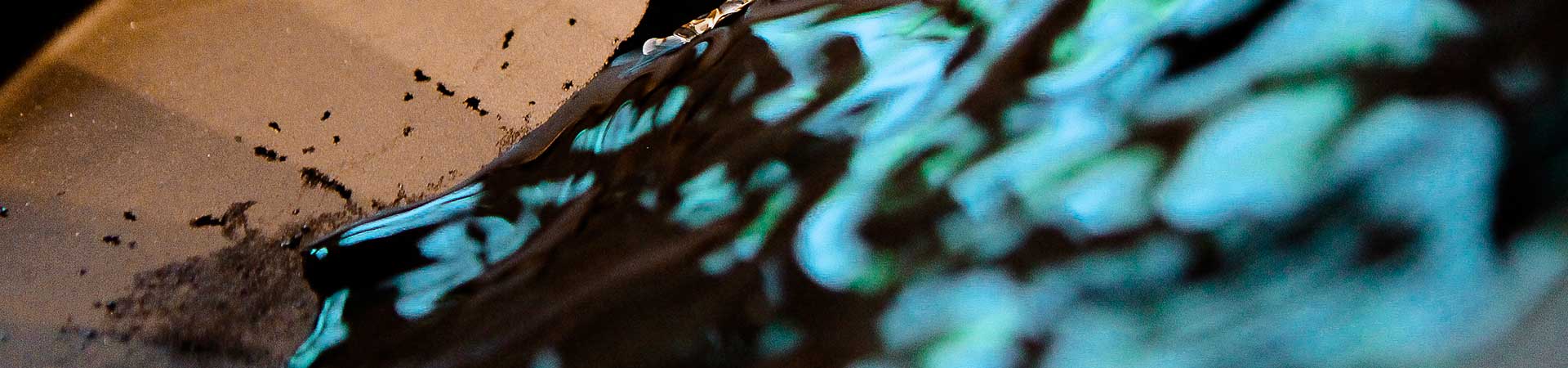
Teresa van Dongen explored design through living organisms and evolving ecological relationships, while OXMAN’s work with bacterial pigmentation suggested alternatives to synthetic colour production. Nienke Hoogvliet reconsidered the true value of materials that are often overlooked, asking audiences to rethink what constitutes waste and what deserves care. The growing archive dedicated to mycelium, algae, and emerging biomaterials demonstrated that experimentation is no longer confined to laboratories. Across these practices, the material itself became a collaborator, quietly influencing both the process and the final outcome.

pigment growing on textile for OXMAN | image by Nicholas Calcott
heritage in motion
If craft has traditionally been associated with preservation, this chapter revealed a more dynamic understanding of heritage. Rather than treating traditions as fixed, many contributors approached inherited knowledge as something capable of adapting to new contexts without losing its cultural depth. Craft became a conversation between generations rather than a faithful reproduction of the past.
The work of GUNIA Project drew upon Ukrainian material traditions while responding to contemporary cultural realities. The exhibition exploring Japanese craft and technology demonstrated how centuries-old techniques continue to evolve through digital tools and new forms of production. Karl Monies brought inherited craftsmanship into dialogue with fungi and natural materials, creating objects that felt simultaneously ancient and experimental. Across these diverse practices, heritage appeared less as a destination than as an ongoing process of translation, one that keeps cultural knowledge alive precisely because it continues to change.

Arcana, Karl Monies, Etage Projects, Copenhagen, 2018 | image courtesy Etage Projects
transformation and afterlives
Another recurring theme was the capacity of materials to begin again. Throughout the chapter, artists repeatedly challenged ideas of permanence and perfection, choosing instead to work with fragments, discarded matter, and objects carrying visible traces of previous lives. Transformation became a creative principle rather than a technical solution.
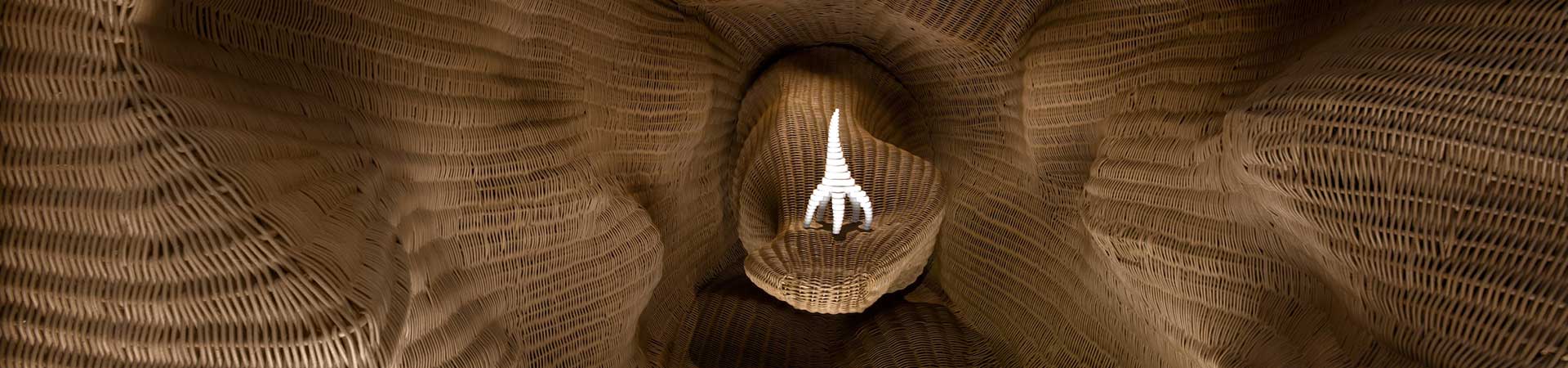
Ben Tuna‘s striking combinations of salvaged stained glass and burned automobiles brought together destruction and renewal in unexpected ways. Jacques Monneraud blurred the distinction between humble cardboard and enduring ceramics, questioning conventional ideas of value. Eva Jospin constructed immersive architectural landscapes from cardboard, revealing extraordinary complexity within an everyday material, while Lilla Tabasso preserved flowers at moments of decay through intricate Murano glass. None of these works attempted to erase time. Instead, they embraced ageing, imperfection, and change as qualities that deepen our relationship with objects.

Jacques Monneraud blurs the distinction between humble cardboard and enduring ceramics | image courtesy of the artist
the intelligence of the hand
Crafting the Future also consistently returned to the importance of manual knowledge. In an era increasingly shaped by automation and digital production, many makers argued that the hand remains a sophisticated instrument of observation, adaptation, and invention. Craft was presented not as the opposite of technology but as a way of enriching it.
Sophie Lou Jacobsen‘s blown glass objects celebrated the subtle variations that emerge through close collaboration with skilled artisans. Miwa Ito transformed molten glass into delicate forms inspired by familiar food, balancing precision with playfulness. Lewis Prosser approached basket making with humour and experimentation, demonstrating how traditional techniques can generate unexpected contemporary languages. Their work reminded us that making is never simply the execution of an idea. Thinking and making unfold together, each informing the other through continuous dialogue with material.

Classic Jelly, Miwa Ito | image courtesy of the artist
communities of making
Many contributors expanded the definition of craft beyond the individual maker. Workshops, local knowledge, regional resources, and collaborative networks appeared throughout the chapter, revealing that creativity often develops through relationships rather than solitary authorship. The value of an object could not be separated from the people, places, and ecosystems that made it possible.
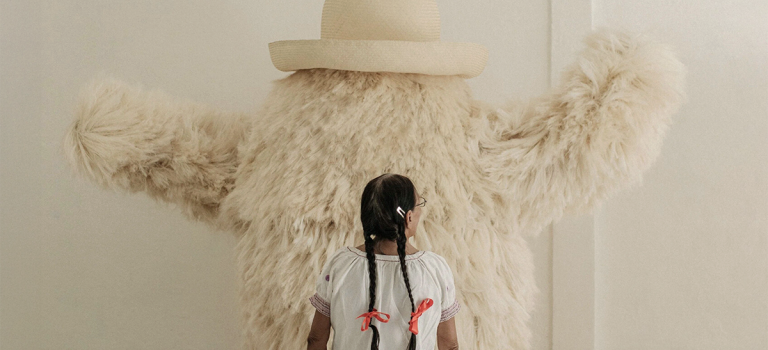
Fernando Laposse‘s long-standing collaborations with farming communities demonstrated how design can strengthen local economies while regenerating landscapes. GUNIA Project highlighted the role of artisans in preserving cultural identity during periods of profound change, while initiatives such as the Visteria Foundation invested in supporting future generations of craftspeople. Together, these projects proposed a broader understanding of authorship, one that acknowledges the many hands, histories, and communities embedded within every act of making.

Gunia works with a network of over 150 craftspeople across ukraine to make their collections | image courtesy of Gunia
beauty through process
Beauty itself also took on new meaning: rather than existing as a polished surface or finished aesthetic, it often emerged through process, experimentation, and the willingness to embrace uncertainty. The featured bodies of work invited viewers to appreciate the time, labour, and transformation that shaped them.
Laila Gohar‘s playful landscapes crafted from food celebrated the temporary and the performative, while Cecilia Vicuña‘s monumental quipu connected weaving, landscape, and memory through powerful gestures of collective remembrance. Lucia Pietroiusti and Filipa Ramos encouraged audiences to rethink the relationships between humans and other living beings, expanding craft beyond the production of objects toward broader ecological conversations. In each case, beauty became inseparable from process, unfolding gradually through participation, attention, and care.

Loaf armchair by Laila Gohar | image by Brian W Ferry
technology with a human scale
Technology appeared throughout the chapter, yet rarely as an end in itself. Instead of celebrating innovation for its own sake, many contributors explored how digital tools, biological systems, and emerging technologies might support more thoughtful relationships with people and the environment. Progress was measured less by efficiency than by the quality of these relationships.
Projects investigating biological fabrication, sustainable computing, and new material systems demonstrated that technological development need not come at the expense of ecological responsibility. Solar Protocol proposed an alternative digital infrastructure shaped by the availability of sunlight rather than constant consumption, while experiments with living pigments and renewable materials suggested quieter forms of innovation grounded in collaboration rather than extraction. The future imagined here was neither nostalgic nor utopian. It was practical, experimental, and deeply attentive to the consequences of how we choose to make.

view of the Future Materials Lab | image by Jan van Eyck Academie
crafting tomorrow
Looking back across Crafting the Future, one lesson becomes increasingly clear. Craft is no longer defined by a particular material, technique, or discipline. It is an approach to the world that values attentiveness over speed, collaboration over isolation, and long term stewardship over short term production. Whether expressed through architecture, glass, textiles, biological systems, sculpture, or digital technologies, the projects gathered here shared a commitment to understanding making as an ongoing cultural practice rather than a finished result.
For much of the last century, craft was positioned as the counterpart to industry, existing somewhere between tradition and nostalgia. The voices brought together throughout this chapter offered a different perspective. They revealed craft as a site of experimentation where ecological thinking, technological innovation, material intelligence, and cultural memory intersect. In doing so, they suggested that the future will not be crafted through novelty alone, but through our willingness to learn from materials, from one another, and from the countless forms of knowledge that continue to shape the world by hand.

Large Sisal Monster, 2018, Fernando Laposse. image courtesy the artist